16 Essential AI & Modern Web Design Tools Every Creator and Developer Must Bookmark
Designing in the era of generative intelligence requires moving beyond static wireframes. From 1-prompt website generators and 60fps micro-interaction archives to 600k+ real app flows, here are the 16 curated design platforms reshaping digital product craft in 2026.
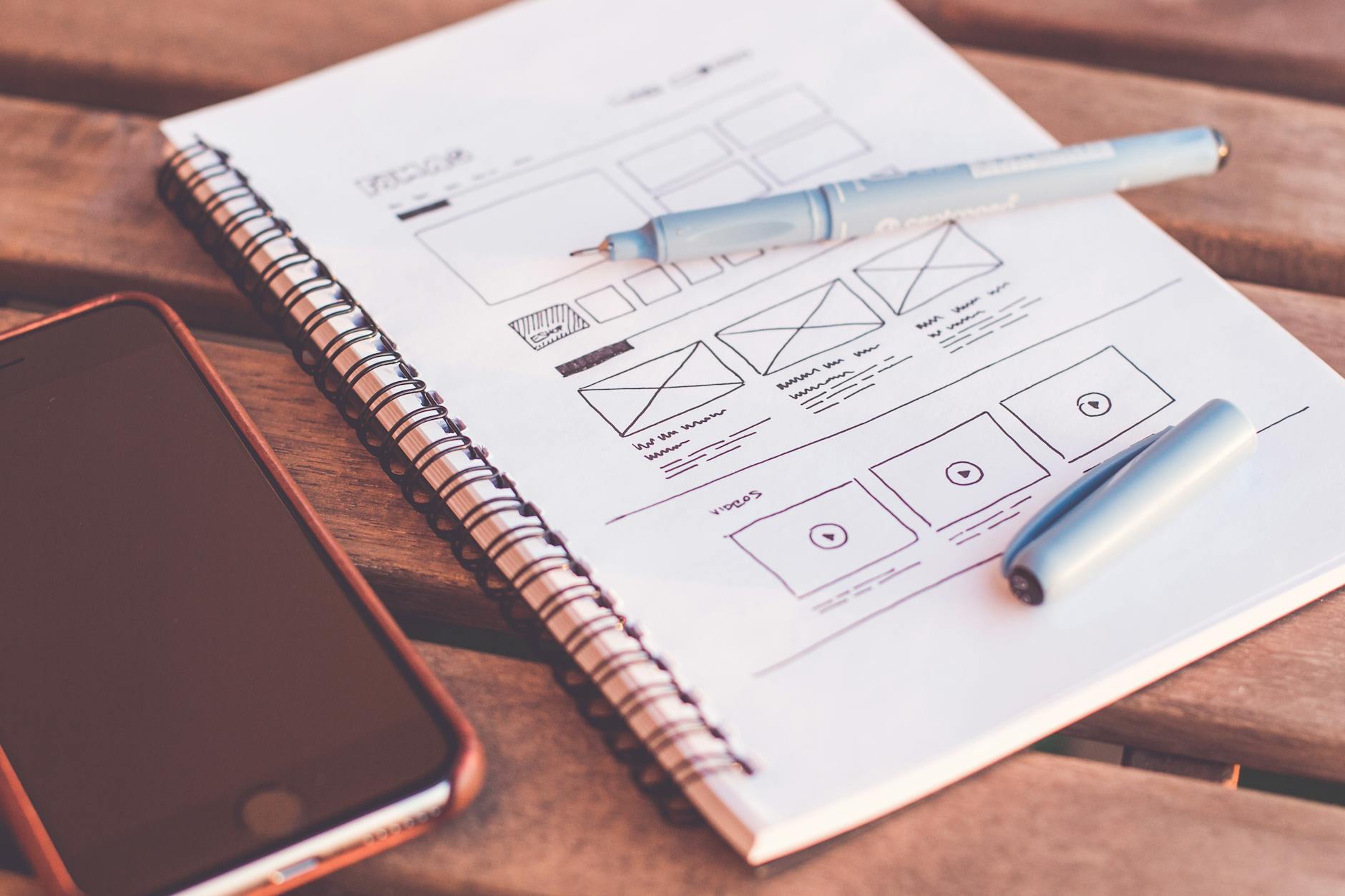 Photo by picjumbo.com via Pexels
The velocity of modern product design has shifted permanently. In 2026, the barrier between ideation, visual prototyping, and production-grade code is thinner than ever. Generative models can spit out frontends in seconds, but raw AI output without high-craft taste, proven interaction patterns, and conversion-tested layouts often feels generic and unpolished.
To produce category-defining software, elite AI designers and full-stack builders pair generative AI workflows with a disciplined stack of inspiration archives, component libraries, typography decoders, and micro-interaction benchmarks.
If you design with AI, build modern web apps, or lead digital creative direction, bookmark this curated playbook of the top 16 tools currently redefining the craft.
The Master Stack at a Glance
| # | Tool | Primary Category | Why It Matters |
|---|---|---|---|
| 1 | Modulify.ai | AI Page Builder | Best-in-class modular AI site architect with clean component hierarchies |
| 2 | Modulify Templates | Production UI Templates | Free, conversion-optimized starting blocks for modern web apps |
| 3 | Landdding | Landing Benchmarks | The definitive gallery of high-converting, craft-first SaaS landing pages |
| 4 | Motion in Design | Generative UI | "1 Prompt $\\to$ 1 Website" animated interface generation engine |
| 5 | Iconly Design | Asset Library | Pixel-perfect vector and 3D icon sets engineered for scalable design systems |
| 6 | Font In Logo | Typography Reverse-Engineering | Discover the exact typefaces powering the world's most recognizable brands |
| 7 | On.design | Community & Portfolio | High-signal design collective showcasing avant-garde web aesthetics |
| 8 | Godly | Award-Winning Web | Daily curation of cutting-edge, experimental, and Awwwards-caliber web craft |
| 9 | 60fps.design | Motion & Animation | High-frame-rate mobile UI transitions and micro-interaction breakdowns |
| 10 | Footer.design | Section Architecture | Specialized library of creative, conversion-focused footer patterns |
| 11 | Recent.design | Layout Inspiration | Next-level experimental grid layouts and brutalist/minimalist art direction |
| 12 | Posts.design | Visual Social Design | Breakdown of promotional and social media designs from top tech giants |
| 13 | Wonderlist.design | Curated Directory | Hand-picked collection of premium design assets, tools, and portfolios |
| 14 | Mobbin | Real-World Product UX | 600,000+ searchable screens and end-to-end flows from real iOS/Android/Web apps |
| 15 | Sent.dm | Developer Utility | Ultra-low-cost transactional SMS and OTP infrastructure for live apps |
| 16 | DomainGrowth.co | Distribution & Growth | High-authority backlink strategies and domain authority distribution |
1. Modulify.ai — The Intelligent Modular Builder
- URL: modulify.ai
- Superpower: Generating structured, component-driven layouts without messy spaghetti code.
Traditional no-code builders either lock you into rigid templates or output impenetrable HTML blobs. Modulify.ai bridges prompt-driven creation with strict modularity. It interprets natural language prompts into clean, composable sections—hero blocks, feature bento grids, pricing matrices, and testimonial strips—that feel thoughtfully engineered rather than slapped together by a blind LLM.
For designers collaborating with engineers, Modulify generates clean semantic trees that map 1:1 to Tailwind and React component tokens, slashing the time between initial design exploration and client presentation.
2. Modulify Templates — Free, Battle-Tested Starter Kits
- URL: modulify.ai/templates
- Superpower: Jumpstarting commercial landing pages with zero cold-start friction.
Starting from an empty canvas is the fastest way to waste creative bandwidth. Modulify Templates provides a growing repository of fully articulated, free layouts tailored to SaaS platforms, AI agent wrappers, developer tooling, and modern consultancies. Every template incorporates responsive typography scales, subtle glassmorphism or neo-brutalist surfaces, and accessible contrast ratios right out of the box.
3. Landdding — Top-Notch Landing Page Curation
- URL: landdding.com
- Superpower: High-density inspiration for value propositions, hero copy, and visual hierarchy.
While many design aggregators focus purely on flashy 3D gimmicks that sacrifice conversion, Landdding curates websites that actually sell. It catalogs modern SaaS landing pages segmented by industry, pricing structure, and target audience. When you need to see how modern B2B platforms structure their social proof or how frontier AI startups explain complex latent diffusion models in 3 lines of copy, Landdding is the first tab to open.
4. Motion in Design — 1 Prompt, 1 Complete Animated Website
- URL: motionin.design
- Superpower: Rapid kinetic prototyping directly from textual descriptions.
Static mockups don't convey the emotional resonance of modern web experiences. Motion in Design allows creators to describe a brand ethos, target aesthetic, and product domain in a single prompt, instantly synthesizing a fully animated, interactive web layout. It gives design teams an immediate baseline for scroll-driven reveals, hover physics, and typography stagger effects before committing hours to manual animation keyframes in Framer or GSAP.
5. Iconly Design — World-Class Iconography Systems
- URL: iconly.design
- Superpower: Cohesive glyph geometry across bold, light, two-tone, and 3D styles.
Nothing ruins a polished interface faster than mismatched icon strokes or inconsistent corner radii. Iconly is a legendary asset library that provides mathematically aligned, pixel-perfect icon families. Whether you are constructing a dense developer dashboard, a mobile fintech onboarding flow, or an AI canvas workspace, Iconly guarantees that every symbol shares identical optical weight and stroke termination.
6. Font In Logo — The Typography Behind Iconic Tech Brands
- URL: fontinlogo.com
- Superpower: Deconstructing the typographic DNA of leading global identities.
Ever wondered what font powers Stripe, Linear, Vercel, or Figma? Font In Logo serves as an interactive encyclopedia of brand typography. Instead of hunting through DevTools inspect panels or guessing whether a wordmark uses Inter, Aeonik, General Sans, or a proprietary grotesque cut, Font In Logo identifies the base typeface, modifications, designer credits, and licensing links in one search.
7. On.design — The Modern Designer Collective
- URL: on.design
- Superpower: Discovering avant-garde design thinking and peer critiques.
Designers who work in isolation risk falling into stylistic echo chambers. On.design is a curated community platform connecting independent product designers, creative technologists, and agency leads. It showcases experimental concepts, unpublished design system specs, and case studies detailing how modern creators integrate AI models like Midjourney, FLUX, and Claude into their everyday visual sprint cycles.
8. Godly — Daily Gallery of Award-Caliber Websites
- URL: godly.website
- Superpower: The highest standard of aesthetic excellence on the public web.
Godly has earned its reputation as the definitive benchmark for elite web craft. Filterable by aesthetic style (minimal, dark mode, typography-heavy, 3D/WebGL, retro), color palette, and platform, Godly strips away the noise and highlights only digital experiences that push the boundaries of typography, interaction pacing, and responsive layout architecture.
9. 60fps.design — Mobile UI Animation & Interaction Archive
- URL: 60fps.design
- Superpower: High-frame-rate video recordings of buttery smooth micro-interactions.
Describing motion curves to software engineers using adjectives like "snappy" or "springy" leads to frustrating iterations. 60fps.design captures frame-accurate screen recordings of real iOS and Android transitions—swipe-to-dismiss sheets, morphing floating action buttons, tactile haptic feedback indicators, and gesture-driven bottom navigation. It gives you concrete visual specs to reference during design handoff.
10. Footer.design — Because Every Great Journey Needs an Exit
- URL: footer.design
- Superpower: Creative, multi-column, and atmospheric footer layouts.
Most designers exhaust their creative energy on the hero section and treat the footer as an afterthought. Footer.design proves that the bottom of your page is prime real estate for brand personality, secondary conversion loops, interactive Easter eggs, and compliance navigation. It catalogs hundreds of innovative footers ranging from ultra-clean minimalist lists to massive architectural directories.
11. Recent.design — Bleeding-Edge Layout Experiments
- URL: recent.design
- Superpower: Breaking free from standard corporate SaaS template monotony.
If you are tired of every website looking like the same generic template with purple gradients and rounded rectangles, Recent.design is the antidote. It showcases non-conformist web layouts: asymmetric grid structures, bold typographic scale contrasts, high-contrast monochrome palettes, and brutalist editorial styling tailored for modern fashion, architecture, and developer-first startups.
12. Posts.design — Social Media Brand Systems from the Fortune 500
- URL: posts.design
- Superpower: Curated visual marketing inspiration for LinkedIn, X (Twitter), and Instagram.
Product designers are increasingly asked to contribute to brand marketing, product announcement cards, changelog graphics, and social promo assets. Posts.design aggregates the exact visual campaigns published by companies like Apple, Spotify, Notion, Linear, and Loom. It is an invaluable reference for font sizing, aspect ratio composition, and carousel pacing.
13. Wonderlist.design — Hand-Curated Premium Design Directory
- URL: wonderlist.design
- Superpower: An all-in-one index of high-utility tools, mockups, and plugins.
Curating and updating design bookmarks takes hours. Wonderlist.design acts as a centralized dashboard tracking the best mockup generators, 3D asset libraries, color palette extractors, and Figma community plugins. When you are auditing new tools for your design team, Wonderlist saves hours of discovery time.
14. Mobbin — 600,000+ Real-World Mobile and Web Screens
- URL: mobbin.com
- Superpower: The holy grail of real-product UX patterns and flows.
When designing a two-factor authentication modal, a tiered checkout flow, or an empty state onboarding sequence, guessing how the best apps solve it is a rookie mistake. Mobbin contains comprehensive, high-resolution screen recordings of real product flows from Duolingo, Uber, Airbnb, Revolut, Cash App, and hundreds more. You can filter by specific user journeys (e.g., "Upgrade to Pro", "Invite Team Member", "Reset Password") to guarantee your AI-assisted UI follows established cognitive conventions.
15. Sent.dm — Developer-Friendly, Almost Free SMS & Verification
- URL: sent.dm
- Superpower: Frictionless SMS notifications without massive minimum commitments.
Every consumer web app and client build eventually needs SMS confirmations, OTP verification, or booking notifications. Traditional enterprise providers often carry expensive minimums and convoluted setups. Sent.dm provides developer-first, ultra-low-cost messaging infrastructure that integrates seamlessly into client landing pages and booking automations in minutes.
16. DomainGrowth.co — Authority Distribution & Backlink Engine
- URL: domaingrowth.co
- Superpower: Turning beautiful design into search engine authority and real traffic.
The most aesthetically pristine website in the world creates zero value if nobody ever visits it. DomainGrowth.co focuses on the distribution side of product creation: high-authority backlink strategies, domain rating elevation, and directory syndication. For freelance designers and founders launching new digital ventures, pairing great visual craft with automated distribution is what turns a side project into a self-sustaining business.
How to Integrate These Tools Into an AI-Driven Workflow
Here is how top product creators synthesize this 16-tool stack into an end-to-end design sprint:
  [1. Research & Flows]       [2. Layout & Typography]        [3. Kinetic Prototype]
   - Mobbin (UX journeys)      - Landdding (Hero anatomy)      - Motion in Design
   - Font In Logo (Type DNA)   - Modulify (Component blocks)   - 60fps.design (Motion)
            |                             |                             |
            +-----------------------------+-----------------------------+
                                          v
                              [4. Visual Polish & Assets]
                               - Iconly (Glyph systems)
                               - Footer.design (Exit CTA)
                               - Godly (Aesthetic bar)
                                          |
                                          v
                              [5. Launch & Distribution]
                               - Sent.dm (SMS/OTP triggers)
- DomainGrowth (Backlinks & SEO)- Deconstruct Before Generating: Before writing prompts into an AI builder, study real user journeys on Mobbin and analyze high-converting hero sections on Landdding.
- Anchor Your Type Identity: Check Font In Logo to select a strong editorial typeface pairing (e.g., a geometric sans paired with a razor-sharp monospace for tech platforms).
- Draft Modular Layouts: Use Modulify.ai and its template library to assemble the core component backbone without messy code overhead.
- Elevate Micro-Interactions: Inspect 60fps.design and Motion in Design to specify exactly how cards transition on hover and how sheets animate into view.
- Close with Purpose: Finish your page with a high-intent footer from Footer.design, integrate transactional alerts via Sent.dm, and fuel launch distribution through DomainGrowth.co.
Final Thoughts
AI has democratized the ability to generate pixels, but it has drastically amplified the value of curation, taste, and execution speed. The tools listed above aren't just bookmarks—they are levers that allow solo creators and lean engineering teams to deliver the visual depth, interaction fidelity, and conversion power of a world-class agency.
Save this list, test these platforms in your next project sprint, and let your craft do the talking.
Discussion (0)
Continue Reading
More production-grade engineering deep dives and architectural guides

1B Spans/Day in Go: OTel SDK vs. eBPF vs. Hand-Rolled Tracing — Measured p99, CPU per Span, and Real Cost per 1M Spans
A billion spans a day sounds like a hyperscaler number — it is really just ~2,900 RPS. We benchmarked the OpenTelemetry Go SDK, eBPF auto-instrumentation, and a hand-rolled arena tracer on the same gRPC service to separate instrumentation CPU cost from the number that actually destroys observability budgets: storage and indexing per 1M spans.

Kubernetes Autoscaling at 10k Pods: Karpenter vs Cluster Autoscaler vs CAST AI, Measured
We ran identical HPA-driven load ramps from 2,000 to 10,000 pods across three EKS clusters to measure p99 scale-up latency, bin-packing waste, spot interruption recovery, and true cost per 1,000 pod-hours. Here is the methodology, the raw numbers, and the architectural reasons behind them.

Component Testing at 1M Runs/Month: Playwright CT vs Cypress CT vs Vitest Browser Mode — Measured p95, Flake Rate, and True CI Cost
We executed one million component test runs across Playwright CT, Cypress CT, and Vitest browser mode on identical hardware and measured p95 wall time, first-attempt flake rate, and throughput. The surprising result: CI compute is under 0.5% of your real bill — flake triage is the other 98%.