The AI Super Highway: Engineering Low-Latency Optical Backbones for Distributed Compute Grids
Analyzing the architecture behind dedicated 10,000-kilometer AI optical fiber backbones: How Dense Wavelength Division Multiplexing (DWDM), 800G coherent optics, and edge interconnects eliminate cross-datacenter training serialization bottlenecks.
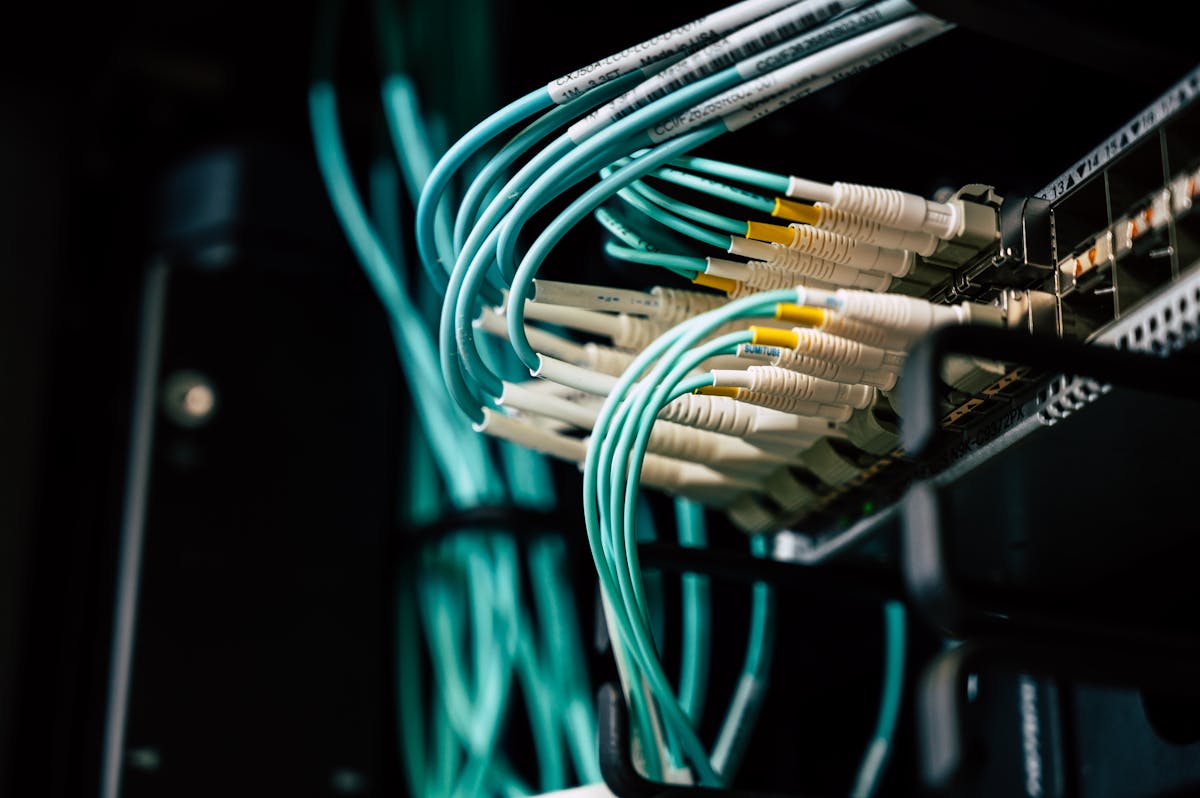
The AI Super Highway: Engineering Low-Latency Optical Backbones for National Compute Grids
In late October 2026, Tata Communications announced an ambitious strategic investment of approximately $450 Million to construct a dedicated, high-speed "AI Super Highway" across India. The project encompasses the deployment of roughly 10,000 route kilometers of newly commissioned long-haul and metro fiber-optic cable, specifically architected to interconnect emerging hyperscale data center clusters across western and southern regional corridors.
While software developers frequently focus on floating-point operations per second (FLOPs) and GPU tensor core counts, the fundamental physical barrier confronting multi-datacenter AI model training and federated inference is network serialization and photonic propagation latency.
The Distributed AI Training Bottleneck: The All-Reduce Problem
When training large language models or multimodal reasoning engines across distributed GPU superclusters, models are partitioned using a combination of Pipeline Parallelism (PP), Tensor Parallelism (TP), and Data Parallelism (DP).
At the conclusion of each forward and backward gradient computation step, GPUs must synchronize billions of weight parameters across the cluster using the Ring All-Reduce or Tree All-Reduce algorithm:
$$ ext{Time}_{ ext{All-Reduce}} = 2 left( rac{n-1}{n} ight) rac{M}{B} + 2(n-1) alpha$$
Where:
- $M$ is the message size in bytes (gradient parameters).
- $B$ is the network bandwidth in bytes/second.
- $alpha$ is the per-hop network latency.
- $n$ is the total count of GPU compute nodes.
flowchart LR
    subgraph Data Center Alpha (Mumbai Cluster)
        A["GPU Rack 1 (Model Layers 1-32)"]
        B["GPU Rack 2 (Model Layers 33-64)"]
    end

    subgraph 10,000km DWDM Optical Backbone
        C["Optical Line Terminal - 800G Coherent"]
        D["Reconfigurable Optical Add-Drop Multiplexer (ROADM)"]
        E["Optical Line Terminal - 800G Coherent"]
    end

    subgraph Data Center Beta (Bengaluru Cluster)
        F["GPU Rack 3 (Model Layers 65-96)"]
        G["GPU Rack 4 (Model Layers 97-128)"]
    end

    A <--> C
    B <--> C
    C <--> D
    D <--> E
    E <--> F
    E <--> G
If inter-datacenter latency $alpha$ climbs above 5 to 8 milliseconds, the thousands of multi-million-dollar GPUs sit completely idle, stalled in high-latency network wait-states. This phenomenon is known as GPU Starvation.
Technical Architecture of the AI Optical Grid
Tata Communications' 10,000-kilometer infrastructure project addresses this bottleneck through three distinct physical-layer technologies:
1. Dense Wavelength Division Multiplexing (DWDM) & 800G Coherent Transceivers
Traditional telecom fiber multiplexed up to 40 channels at 100 Gbps. The newly deployed corridors implement C+L band DWDM systems:
- Dual-Polarization 16-QAM Modulation: Encoding 4 bits per symbol per polarization state.
- 800 Gbps per Wavelength: Utilizing modern DSPs running at 130+ Gigabaud symbol rates.
- Total Fiber Pair Capacity: Exceeding 48 Terabits per second (Tbps) across a single fiber pair.
2. Contentionless, Colorless, Directionless ROADMs (CDC-ROADM)
In conventional routing, optical signals are converted to electrical signals (O-E-O conversion) to be switched, introducing hundreds of microseconds of buffering overhead.
- CDC-ROADMs perform switching entirely in the photonic domain using Liquid Crystal on Silicon (LCoS) wavelength selective switches.
- Photons pass transparently through junction points without optical-electrical-optical conversion, reducing transit latency to the pure speed of light in silica glass ($approx 4.9 mu ext{s/km}$).
// Calculation model: Estimating photonic transit latency and GPU utilization efficiency
interface NetworkLinkProfile {
  distanceKilometers: number;
  glassRefractiveIndex: number; // Silica core typically 1.468
  edfaAmplifierHops: number;
  allReducePayloadMegabytes: number;
}

export function computePhotonicLatency(profile: NetworkLinkProfile): {
  oneWayLatencyMs: number;
  roundTripTimeMs: number;
  estimatedGpuIdlePercentage: number;
} {
  const speedOfLightKmPerSec = 299792;
  const signalVelocityKmPerSec = speedOfLightKmPerSec / profile.glassRefractiveIndex;

  // Fiber propagation time
  const propagationTimeSec = profile.distanceKilometers / signalVelocityKmPerSec;
  // Erbium-Doped Fiber Amplifier (EDFA) delay (~15ns per amplifier node)
  const amplifierDelaySec = profile.edfaAmplifierHops * 15e-9;

  const oneWayMs = (propagationTimeSec + amplifierDelaySec) * 1000;
  const rttMs = oneWayMs * 2;

  // Empirical formula for GPU stall ratio under distributed Ring All-Reduce
  const stallRatio = Math.min(0.85, (rttMs / 25) * 0.4);

  return {
    oneWayLatencyMs: Number(oneWayMs.toFixed(3)),
    roundTripTimeMs: Number(rttMs.toFixed(3)),
    estimatedGpuIdlePercentage: Math.round(stallRatio * 100),
  };
}
Sovereign Cloud Implications: Unlocking Regional AI Parity
Historically, world-class compute infrastructure was heavily concentrated in a few coastal metropolitan hubs. This multi-hundred-million-dollar optical initiative transforms India's digital geography:
- Greener Compute Siting: High-density AI training clusters can now be built near solar and wind energy plants in semi-arid regions of Gujarat and Rajasthan, while remaining optically linked to financial and enterprise databases in Mumbai and Bengaluru with sub-10ms round-trip latency.
- Support for National Foundational Models: Training foundational AI models on India's 22 official languages requires pooling distributed datasets from agricultural, educational, and medical repositories across the nation without centralized bandwidth choking.
References & Sources
Discussion (0)
Continue Reading
More production-grade engineering deep dives and architectural guides

Biggest Hack in the World: Binance Suffers Unprecedented $6.3 Billion Multi-Chain Cyberattack
A comprehensive technical autopsy of the $6.3B Binance hot-wallet breach attributed to TraderTraitor (Lazarus Group). How automated sweeping, compromised DevOps credentials, and cross-chain execution sparked the largest heist in financial history.
Mobile Push at 100M Devices: Benchmarking FCM, APNs, and Custom WebSockets
At 100M devices, push fails in the tail, not the median. We break down real delivery-latency percentiles for APNs, FCM, and owned WebSockets, plus a reproducible cost model and the reliability patterns behind 99.99%.
Landing Page Experimentation at 50M Sessions: Client-Side A/B Testing vs. Edge Decisioning vs. Server-Side Flags — Flicker, INP, and Cost per Million Decisions Benchmarked
At 50 million monthly sessions, where your A/B test makes its decision stops being a tooling preference and becomes a Core Web Vitals and P&L decision. This is a head-to-head benchmark of client-side DOM mutation, edge middleware bucketing, and server-side feature flags — measured on CLS flicker, INP, and true cost per million decisions.